
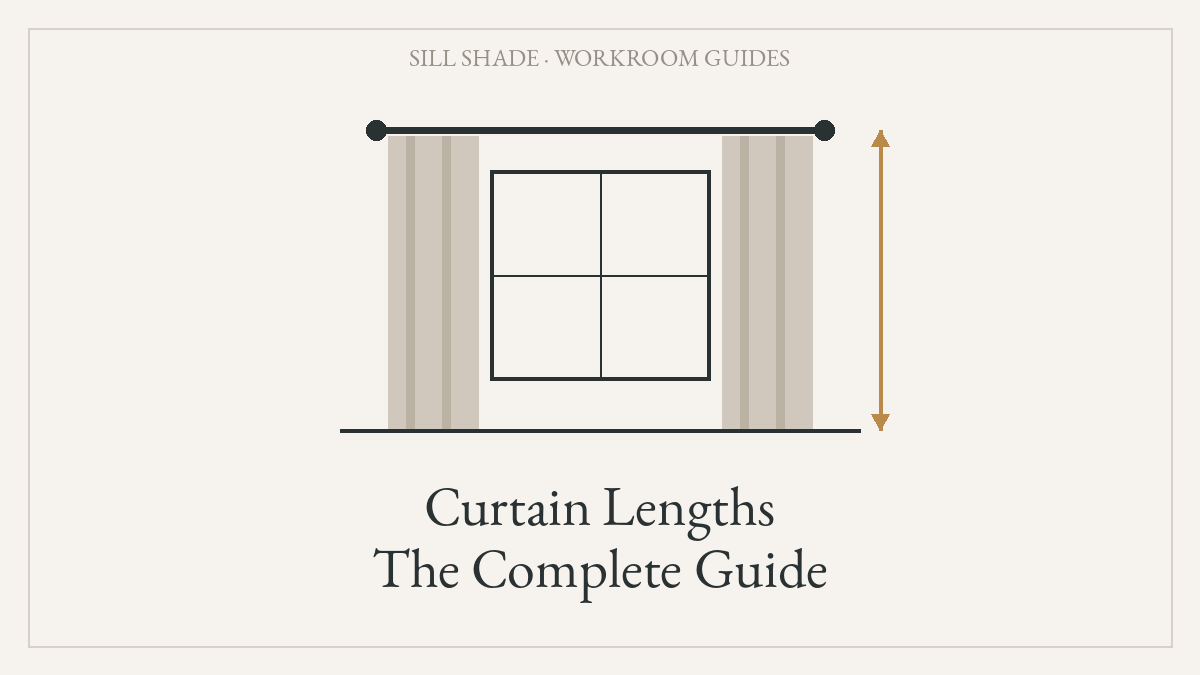
By the Sill Shade workroom team — we’ve been measuring, sewing, and hanging curtains for over 60 years.
Here’s the short answer: for most rooms, your curtains should just touch the floor or hover no more than half an inch (1 cm) above it. The five standard ready-made curtain lengths in the US are 63, 84, 95, 108, and 120 inches — and for a typical 8-foot ceiling, 95-inch panels hung high on the wall look far better than the 84-inch panels most people buy. In this guide, we’ll show you exactly which length to choose for every window, ceiling height, and style, using the same rules we apply in our own workroom. For the full table of standard sizes and what each fits, see our standard curtain sizes chart.
Curtain Length Chart: Standard Sizes
Ready-made curtain panels in the United States come in five standard lengths. This chart shows where each one is meant to be used:
| Panel length | Best for | Where the hem lands |
|---|---|---|
| 63″ | Kitchens, bathrooms, windows with radiators or counters below | At the window sill or apron |
| 84″ | Rooms where the rod must sit just above the window frame | Floor-length only if your windows are short — often ends up awkwardly above the floor |
| 95″ | Standard 8-foot ceilings with the rod hung high (our workroom default) | Just touches the floor |
| 108″ | 9-foot ceilings | Just touches the floor |
| 120″ | 10-foot ceilings, or a puddled look on 9-foot ceilings | Touches the floor or puddles |
One thing that surprises many of our customers: the length on the package is measured from the top of the header (or the top of the rod pocket) to the hem — not from the rod itself. Grommet panels hang about 1–1.5 inches below the rod, which is why two “84-inch” curtains with different headers can land at different heights. We break down every header in our guide to the types of curtains.
The 3 Curtain Length Rules We Use in the Workroom
Rule 1: Hang high, go long
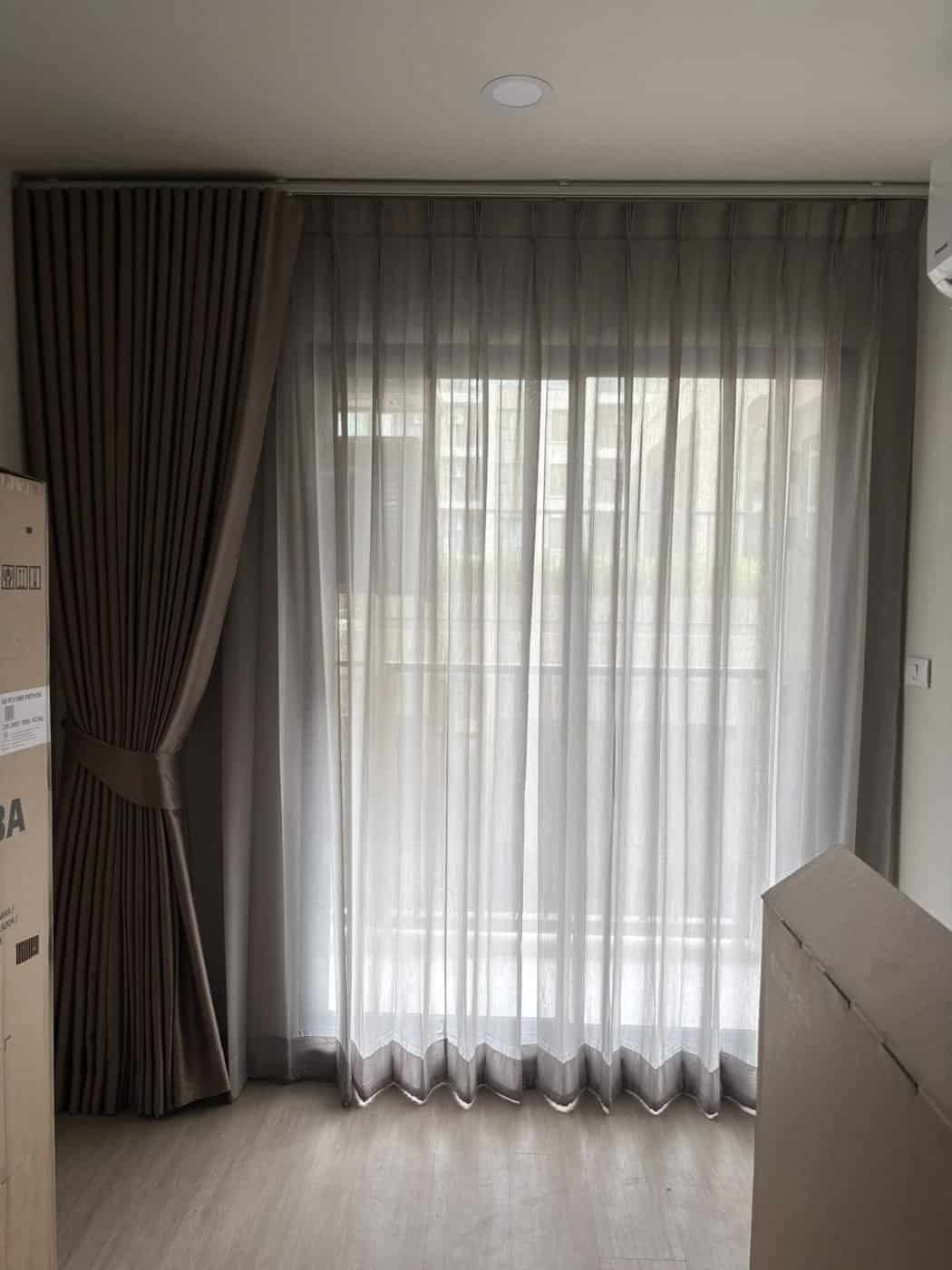
Mount your rod 4–6 inches above the window frame — or halfway between the frame and the ceiling — and let the panels fall all the way to the floor. This one change makes windows look taller and ceilings look higher. It’s the single most common fix we make in customers’ homes: taking down 84-inch panels hung on the frame and replacing them with 95-inch panels hung high.
Rule 2: Curtains should touch the floor (or almost)
“High-water” curtains that stop several inches above the floor make a room feel shorter, the same way pants that are too short do. The only rooms where above-the-floor lengths are correct are kitchens and bathrooms, where fabric near counters, sinks, and radiators is impractical — that’s what sill-length (63-inch) panels and cafe curtains are for.
Rule 3: Pick one floor style and keep it consistent
Within one room — ideally one whole floor of your home — every curtain should meet the floor the same way. The three floor styles:
| Style | Hem position | Best for | Workroom notes |
|---|---|---|---|
| Float | ⅜–½” above the floor | Curtains you open and close daily; homes with pets | Easiest to live with; hem stays clean and never drags |
| Kiss | Hem just grazes the floor | The tailored, custom look | The hardest to get right — measure after the rod is installed, and remember floors are rarely level |
| Puddle | 1–6″ of extra fabric on the floor | Formal rooms, stationary panels, linen and velvet drapes | Beautiful but collects dust; skip it if you have pets or vacuum robots |
Curtain Length by Ceiling Height
If you know your ceiling height, choosing panels takes ten seconds — and our ceiling-height guide has the exact rod heights for each:
- 8-foot (96″) ceilings: 95-inch panels, rod mounted about 92–94 inches high. The rod sits close to the ceiling and the hem floats or kisses the floor.
- 9-foot (108″) ceilings: 108-inch panels for a rod near the ceiling, or 96-inch panels if the rod sits 8 inches lower.
- 10-foot (120″) ceilings: 120-inch panels, or go custom — at this height, made-to-measure is often worth it because ready-made options thin out.
- Cathedral or sloped ceilings: ignore the ceiling; mount 4–6 inches above the window frame and measure to the floor from there.
These same numbers apply whether you’re hanging light cotton curtains or heavy lined drapes — the difference is in the hardware, since heavier fabric needs sturdier brackets. See our drapes guides for lined and pleated panels.
How to Measure: 4 Steps
- Install the rod first (or decide its exact height). Every measurement depends on it. Rod height = 4–6″ above the frame, or halfway to the ceiling.
- Measure from the top of the rod to the floor with a steel tape measure — not a fabric one, which stretches.
- Adjust for the header: rod-pocket and pinch-pleat panels hang from the top of the rod or rings; grommet panels drop 1–1.5″ below the rod. For ring clips, subtract the clip length.
- Measure in three spots — left, center, right. In 60 years we have almost never met a perfectly level floor. Use the smallest number for a float, the largest for a kiss.
Width matters just as much as length: panels should add up to 2 to 2.5 times the window width for proper fullness. Skimpy single panels stretched flat are the second most common mistake we see, right after too-short curtains.
Special Cases
Sill-length and apron-length windows
For kitchens and bathrooms: sill-length hems land within half an inch of the sill; apron-length hems fall about 4 inches below it, covering the trim. Both look intentional. Anything between apron and floor does not.
Sliding glass doors
Treat the door like a floor-length window: rod 4–6 inches above the frame, hem floating just off the floor so panels glide without dragging. Extend the rod 8–12 inches past the frame on the side where the panels stack, so you can actually walk through the door. Exact panel sizes in our sliding glass door guide.
Radiators and window seats
Fabric should never rest against a working radiator. Use sill-length panels, or mount floor-length stationary panels on the wall beside the window so they frame it without covering the heat source.
5 Length Mistakes We Fix Most Often
- Buying 84-inch panels by default — they suit almost no standard American window once the rod is hung at the correct height.
- Measuring from the top of the window frame instead of from the rod.
- Hanging the rod directly on the frame, which chops the wall in half visually.
- Mixing floor styles in one room — one panel floating, its partner puddling.
- Ignoring the header style, then wondering why grommet panels hang lower than the tab-top panels next to them.
Curtain Length FAQ
Should curtains touch the floor?
Yes — in living rooms, bedrooms, and dining rooms, curtains should touch the floor or float no more than half an inch above it. Only kitchen and bathroom curtains should stop at the sill. Bedrooms have their own rules on top of these numbers, which we cover in the bedroom curtains guide.
What is the most common curtain length?
84 inches is the most commonly sold length, but 95 inches is the most commonly correct length for standard 8-foot ceilings with the rod hung properly above the frame.
Is it better for curtains to be too long or too short?
Slightly too long. An extra inch becomes a relaxed “break” on the floor and reads as intentional; an inch too short reads as a mistake. Custom hemming can fix either.
How far above the floor should curtains hang?
For a float, ⅜ to ½ inch — about the thickness of a finger. More than an inch starts to look accidental.
Do 63-inch curtains look bad?
Not in the right room. At kitchen and bathroom windows, or above radiators and counters, sill-length 63-inch panels are the correct choice. In a living room, they will always look too short.
Sill Shade guides are written from real workroom experience — 60+ years of measuring, sewing, and installing window treatments. See also: how to hang curtains, how to measure, and no-drill hanging methods. Explore more in our Curtains, Drapes, Blinds, and Shades guides.