
By the Sill Shade workroom team — matching panel lengths to ceiling heights since the 1960s.
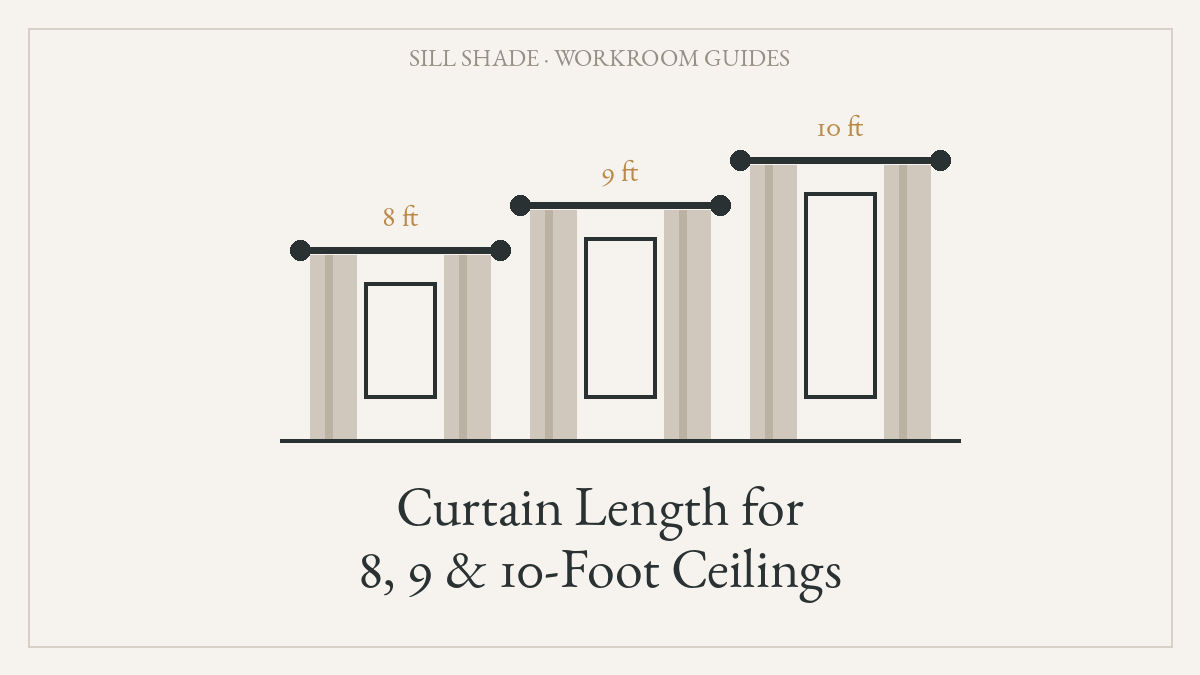
Ceiling height decides curtain length faster than any other factor. The short version: 8-foot ceilings take 95-inch panels, 9-foot ceilings take 108-inch panels, and 10-foot ceilings take 120-inch panels — in every case with the rod mounted high, about 4–6 inches below the ceiling or crown molding. Below are the exact rod heights and panel numbers for each ceiling, including the awkward in-between heights that ready-made sizes ignore.
Cheat Sheet: Ceiling Height → Rod Height → Panel Length
| Ceiling | Mount the rod at | Buy panels | Result at the floor |
|---|---|---|---|
| 8 ft (96″) | 91–93″ | 95″ (hem or float as needed) | Float to kiss |
| 8.5 ft (102″) | 96–98″ | 95″ (float) or 108″ hemmed | Float / kiss |
| 9 ft (108″) | 102–104″ | 108″ | Kiss to slight break |
| 10 ft (120″) | 114–116″ | 120″ | Kiss to slight break |
| 11 ft+ / vaulted | 4–6″ above the window frame | Custom length (measure rod to floor) | Your choice |
All numbers assume the standard workroom rule — hang the rod high, near the ceiling, not hugging the window frame. If that rule is new to you, our guide to hanging curtains explains the why and how.
8-Foot Ceilings (Most American Homes)
With 96 inches of wall, skip the 84-inch panels that stores push. Mount the rod at about 92 inches — roughly 4 inches below the ceiling — and hang 95-inch panels. The hem lands within an inch of the floor: float it for daily-use curtains or let it kiss for a tailored look. If your windows sit unusually low, 84-inch panels can work with the rod at ~86 inches, but you lose the height-boosting effect that makes ceilings feel taller.
9-Foot Ceilings
Mount at 102–104 inches and hang 108-inch panels. This is the luckiest ceiling height — the standard size fits almost perfectly with no hemming. If you prefer a modest puddle on stationary panels, keep the rod at 104 inches and let the extra inches pool.
10-Foot Ceilings
Mount at 114–116 inches and hang 120-inch panels. Selection thins out at this size, so expect to order online rather than grab in-store — or go custom, which at this scale often costs surprisingly little more than premium ready-made. Wide, heavy panels this tall need a center support bracket and serious anchors; see the hardware chart in our hanging guide.
In-Between and Awkward Heights
- 8.5-ft ceilings: 95-inch panels floating ~1 inch, or 108s hemmed. We hem — a floating hem more than an inch high starts to look accidental.
- Sloped/vaulted ceilings: ignore the peak entirely. Mount 4–6 inches above the window frame and measure rod-to-floor; the ceiling line never touches the math.
- Rooms with crown molding: keep the rod about 2 inches below the molding’s lowest edge so the finials don’t crowd it.
- Radiators under windows: ceiling height stops mattering — use sill-length panels or cafe curtains instead. Details in the main length guide.
How Rod Height Changes the Length You Order
This is the part most size charts skip, and it is the reason two people with identical windows end up needing different panels.
Panel length is measured from the top of the rod ring down, not from the top of the window. So every inch you raise the rod is an inch you have to add to the panel. Raise a rod from 4 inches above the frame to 12 inches above it and you have just moved from a 84-inch panel to a 92-inch one, and 92 is not a size anyone stocks. That is how people end up with curtains that float six inches off the floor.
Decide the rod height first, measure from the ring to the floor second, and only then go looking at sizes. The order matters more than the arithmetic.
12-Foot Ceilings and Double-Height Walls
Past about 11 feet the rules change, because the hardware becomes the constraint rather than the fabric.

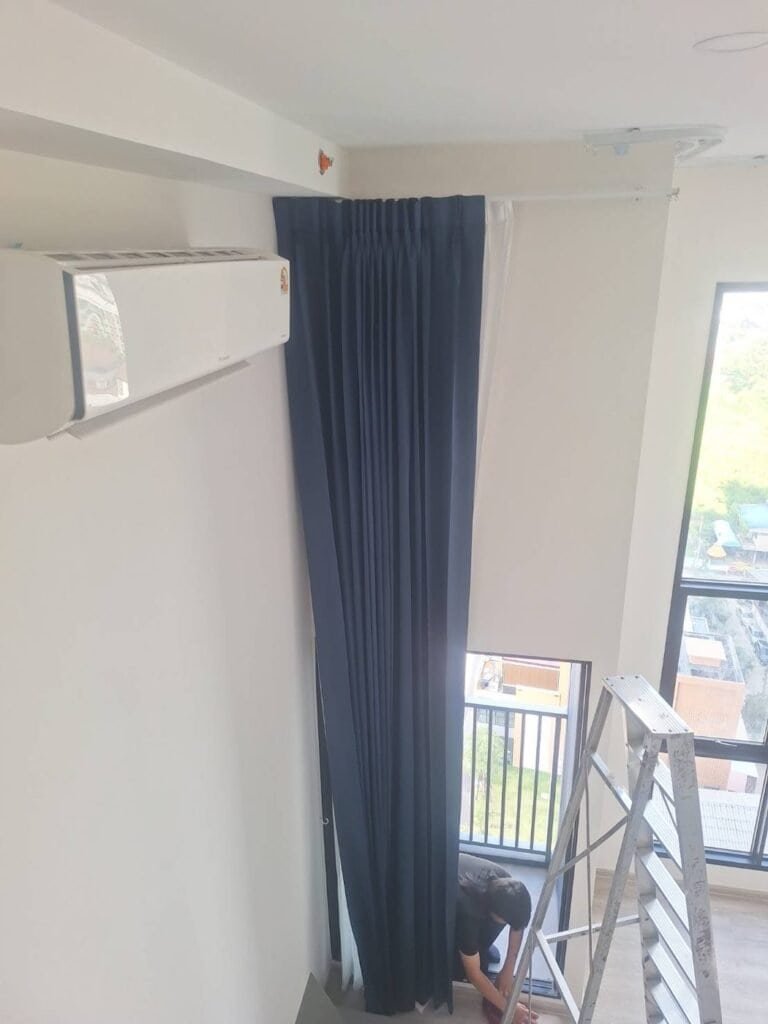
A standard pole will bow under its own length before it bows under the curtain, so on a tall wall we almost always specify a ceiling-mounted track instead. Panels in the 120 to 144 inch range are custom in practice even when a retailer lists them, and the seam placement matters: a horizontal join at eye level on a double-height window is the first thing anyone notices.
Two workroom notes for very tall windows. Weight the hem — a long unweighted panel will swing and never hang plumb. And check the wall for a structural header before you commit to a mounting height; on a two-storey wall the fixing points are often not where you would guess.
Ceiling Track or Rod?
On an 8-foot ceiling this is a style choice. Above 9 feet it becomes a practical one.
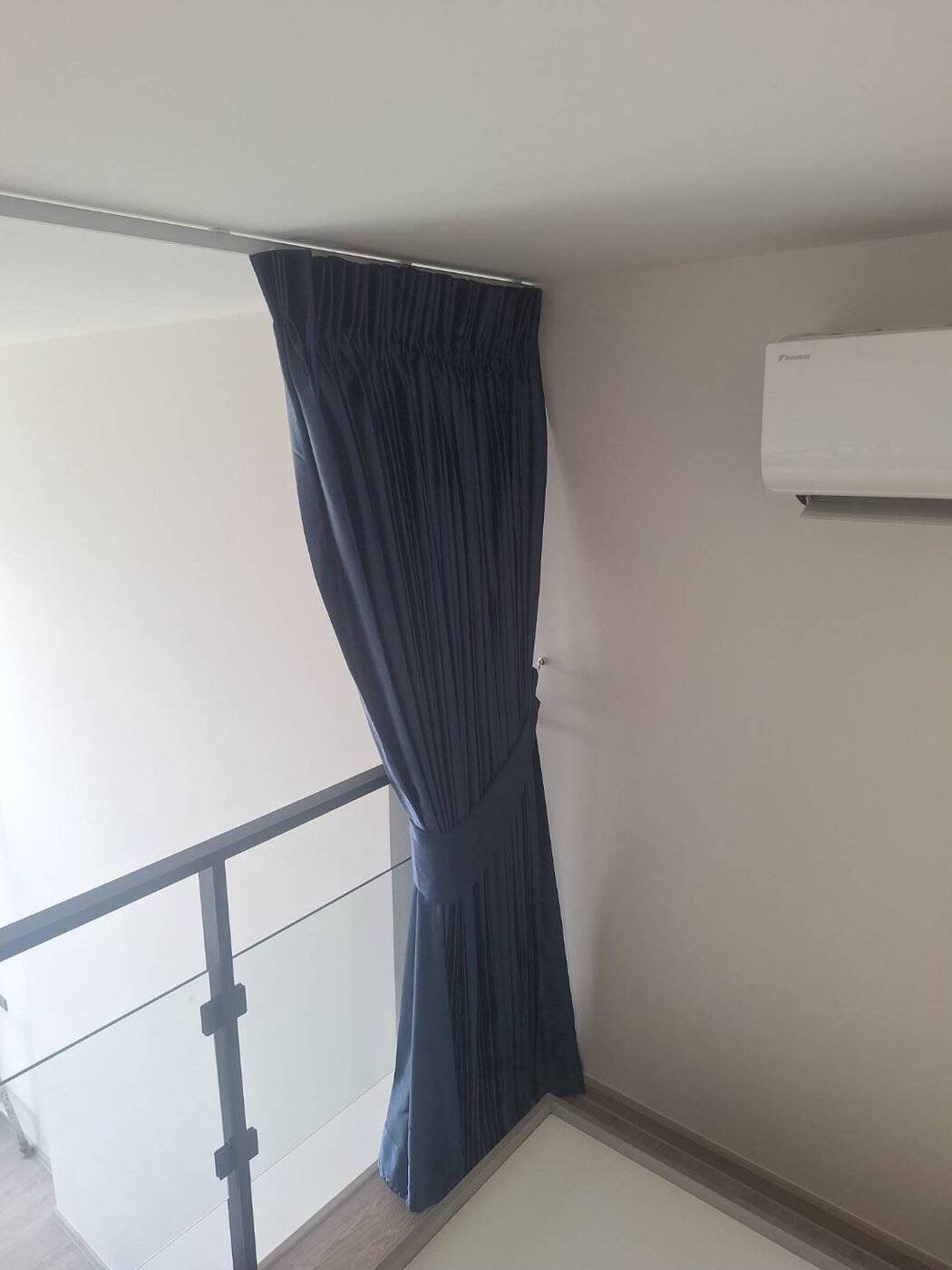
A rod reads as a decorative object and needs wall above the window to sit in. A ceiling track disappears, carries more weight per foot, and lets you take the fabric right to the ceiling line — which is the single most effective trick for making a room feel taller. If you have less than about 12 inches of wall between the window frame and the ceiling, go to the ceiling and stop trying to split the difference. The details of both are in types of curtain rods.
When the Standard Size Does Not Fit
Ready-made curtains come in 63, 84, 96, 108 and sometimes 120 inches. Real rooms do not.
If your measurement lands between two sizes, buy the longer one and hem it. Hemming down is straightforward and reversible; there is no way to add length to a panel that is too short without it looking added. A workroom hem on a lined panel costs a fraction of a new pair of curtains.
The one exception is a rod-pocket panel, where shortening from the top will destroy the pocket. On those, hem from the bottom or change the heading entirely — see pinch pleat curtains for how a workroom heading gives you the adjustment a rod pocket cannot.
Confirm Before You Buy
Ceilings lie. Builder “8-foot” ceilings often measure 94–97 inches after flooring. Before ordering, measure your actual rod-to-floor drop in three spots the way our measuring guide shows — it takes five minutes and has saved our customers hundreds of returns.
FAQ
What length curtains for 8-foot ceilings?
95-inch panels with the rod mounted about 92 inches high. 84-inch panels only if the rod must sit just above the window frame.
What length curtains for 9-foot ceilings?
108-inch panels with the rod at 102–104 inches.
What length curtains for 10-foot ceilings?
120-inch panels with the rod at 114–116 inches — and a center support bracket for anything lined.
Should curtains go to the ceiling or just above the window?
As high as practical: near the ceiling when the gap above the frame is under ~12 inches, or 4–6 inches above the frame on very tall walls. High rods make every room feel taller.
What size curtains do I need for 9-foot ceilings?
Most 9-foot rooms take a 96-inch panel with the rod set 8 to 12 inches above the frame. If you go all the way to the ceiling you are into 108-inch territory. Measure from the ring to the floor before ordering — the rod height decides the size, not the ceiling.
How high should I hang curtains with 8-foot ceilings?
Four to six inches above the frame, or halfway between the frame and the ceiling if that gap is small. On an 8-foot ceiling there is rarely enough wall to justify going higher, and a rod crammed against the ceiling looks cramped rather than tall.
Is 84 or 96 inches right for my window?
84 inches suits an 8-foot ceiling with the rod just above the frame. 96 suits a 9-foot ceiling, or an 8-foot ceiling where you have raised the rod for height. When in doubt, order the longer one and hem it.
Do curtains have to touch the floor?
In a room with normal ceilings, yes — a hem that kisses the floor is what makes the window read as full height. Short panels are for windows blocked by a radiator, a bench, or fixed furniture. Room-specific advice is in our bedroom and living room guides.
Related from the workroom: the complete curtain length guide · how to measure curtains · all curtain guides