
Blinds for sliding glass doors should move sideways, the way the door does. A curtain workroom compares vertical blinds, panel tracks and shades that lift.
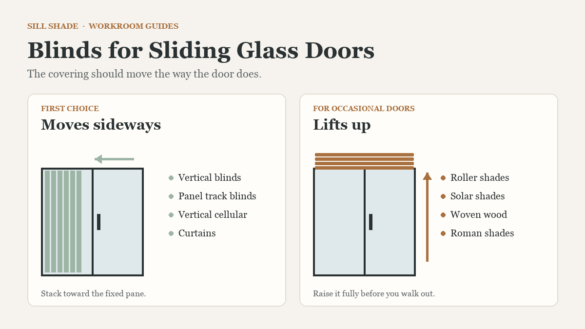

Blinds for sliding glass doors should move sideways, the way the door does. A curtain workroom compares vertical blinds, panel tracks and shades that lift.
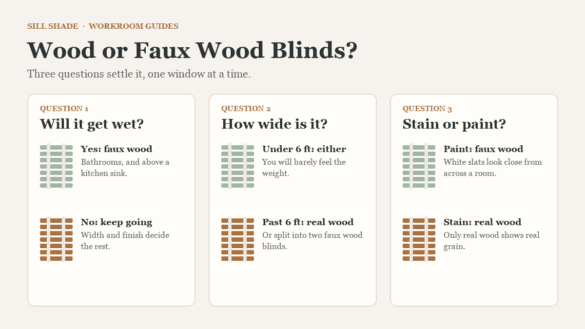
Choosing wood vs faux wood blinds? Three checks settle it: water, window width, and stain or paint. A curtain workroom explains which slat fits each room.
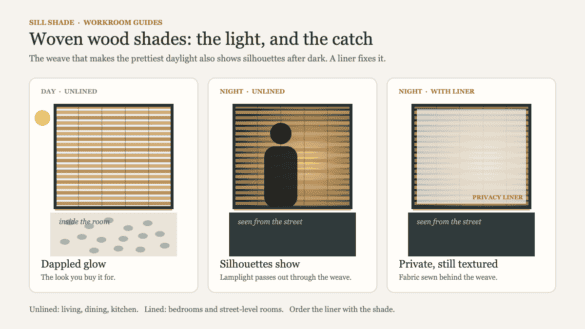
Texture, dappled light, and the night-privacy catch: what bamboo and woven wood shades really do, which liners fix what, and where not to hang them.
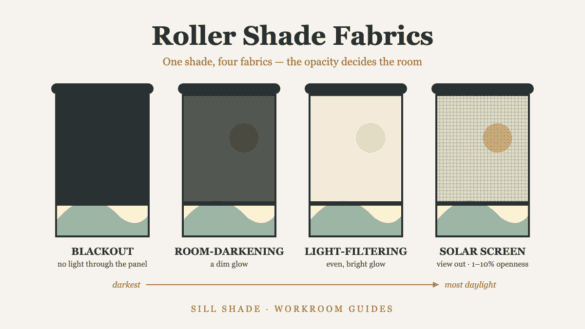
A roller shade is the simplest window covering ever built: a tube, a panel of fabric,…

Cellular shades (honeycomb shades, same product) are the one window covering built for a job other…

A roman shade is a flat fabric panel that draws up into horizontal folds. It is…

Inside mount or outside mount decides everything. Three widths, three heights, a steel tape, and the one deduction rule that prevents remakes.

Blinds have slats that tilt; shades are soft panels. Which wins for bedrooms, kitchens, offices and sliding doors, from a real workroom.

Roller, Roman, cellular, woven wood, solar and zebra shades compared by construction: darkness, insulation and the trade-offs that matter.

Every type of blinds (wood, faux wood, aluminum, vertical, panel track and smart) compared by a 60-year workroom, room by room.